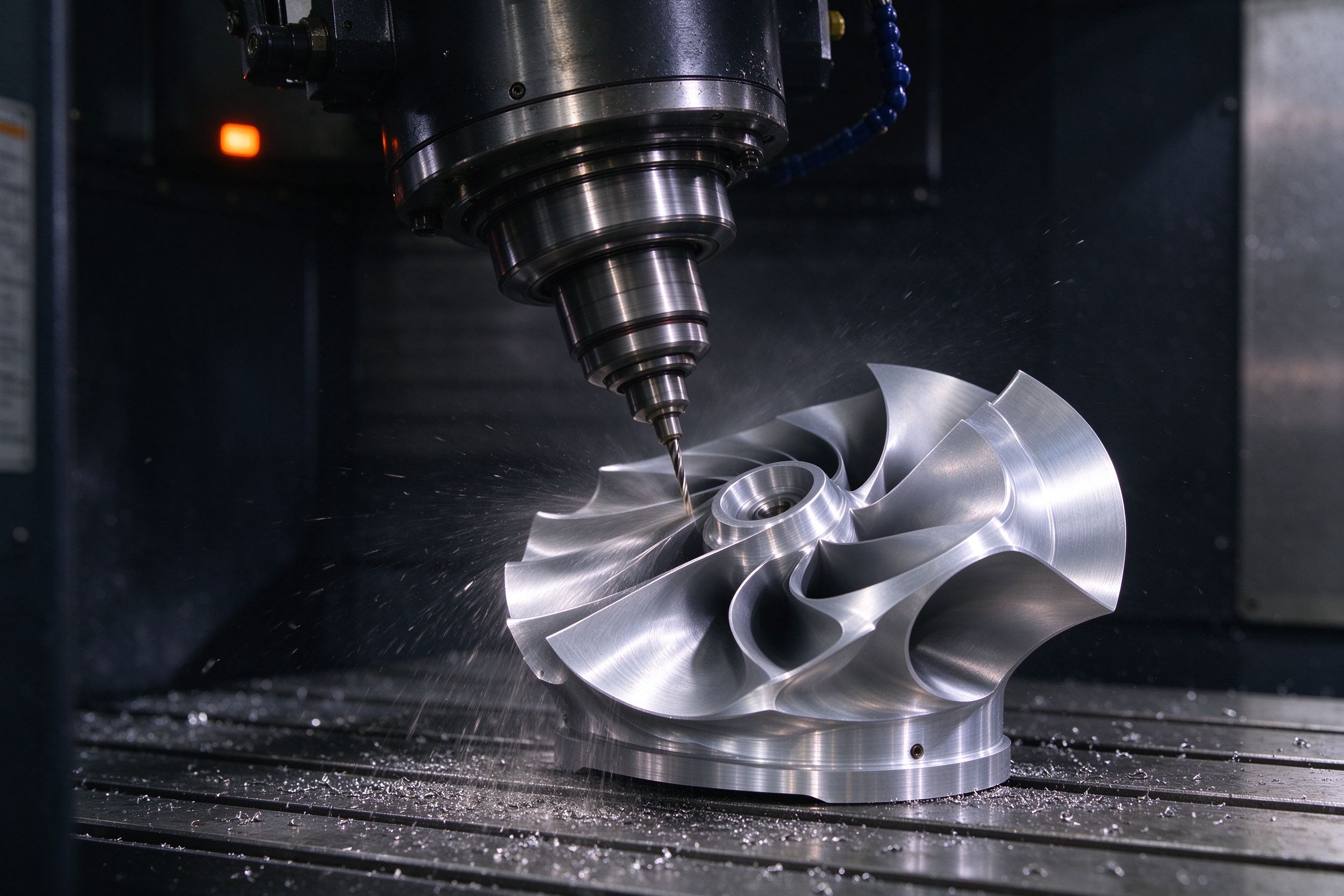
5-Axis CNC Machining
Complex 5-axis and multi-axis components produced in one setup with the precision demanded by aerospace, robotics and medical engineering.
Overview
Our 5-axis CNC machining services use simultaneous five-axis machining centers that move the workpiece and cutting tool across five axes at once. Complex geometries — impellers, turbine blades, angled holes and sculpted surfaces — are completed in a single setup, removing the stack-up error of repeated fixturing.
As a China CNC machining manufacturer with multi-axis, turn-mill and 3-axis capability, we support one-off prototypes, low-volume and small-batch CNC machining as well as serial production, holding the tight tolerance CNC machining (±0.01 mm) that demanding industries require.
Capabilities
Simultaneous 5-axis
Continuous five-axis interpolation for complex surfaces, undercuts and compound angles in one setup.
3+2 positional machining
Efficient indexed 3+2 machining for parts with features on multiple faces at lower cost.
Turn-mill / multi-axis
Combined milling and turning in one cycle for parts that are both rotational and prismatic.
Complex geometries
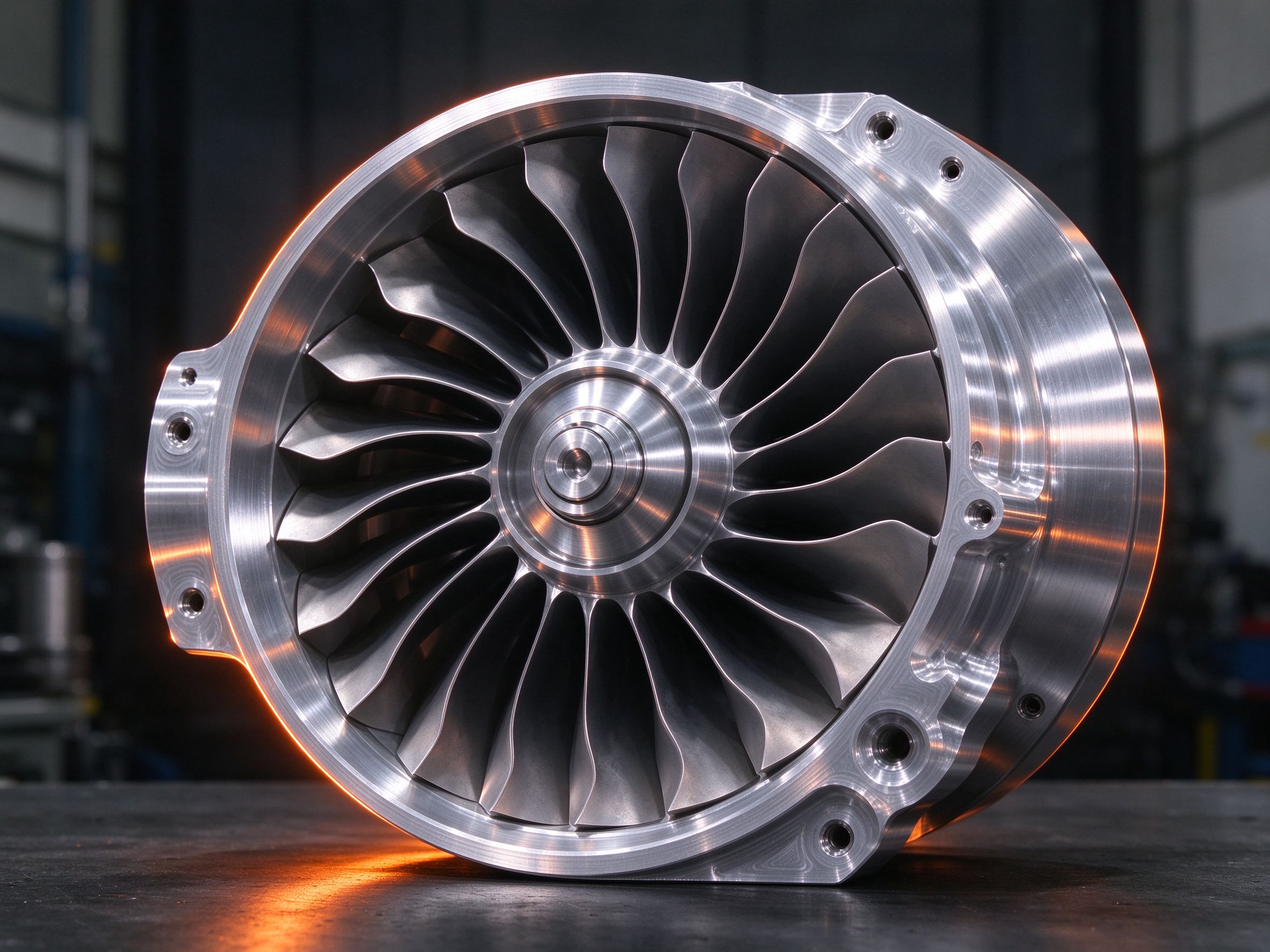
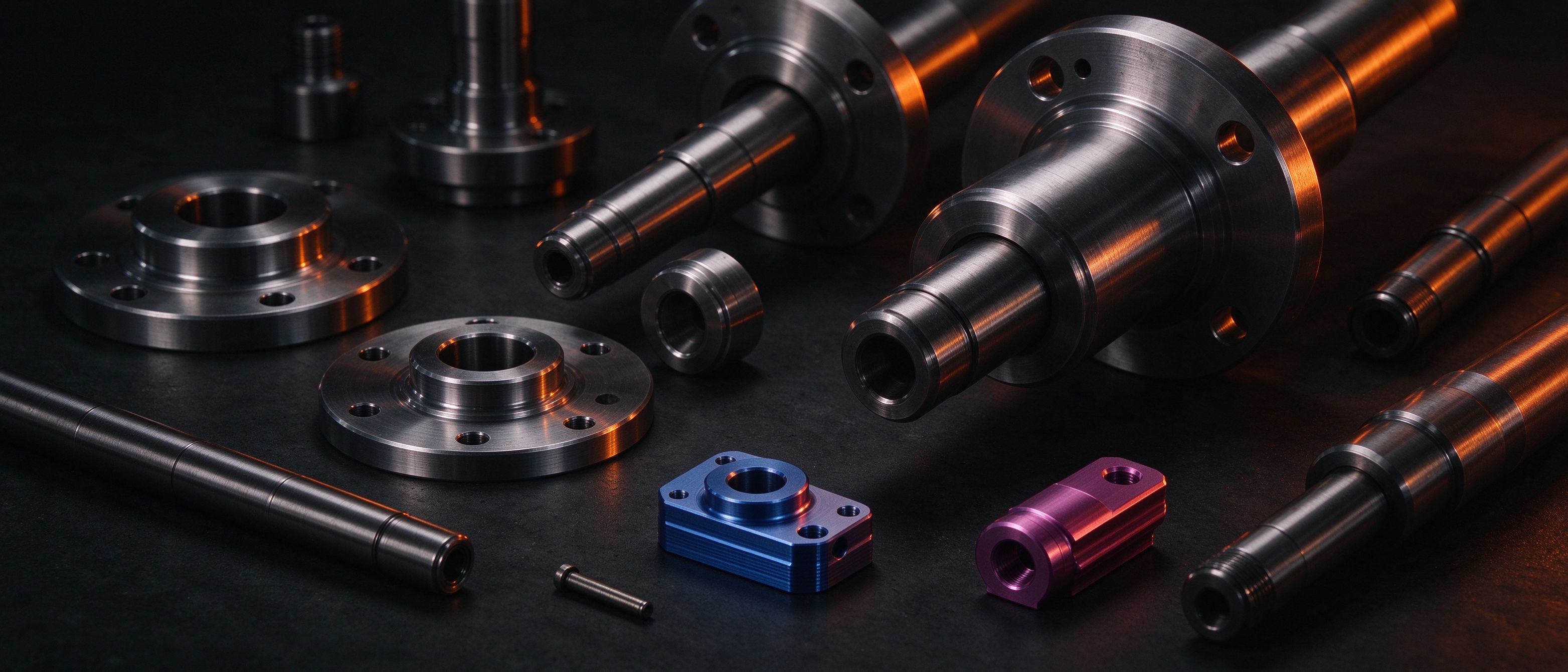
Impellers, blisks, housings, mold tools and robotic structures with deep cavities and thin walls.
Tight tolerance
Positioning and feature tolerances to ±0.01 mm with verified inspection reports.
All common materials
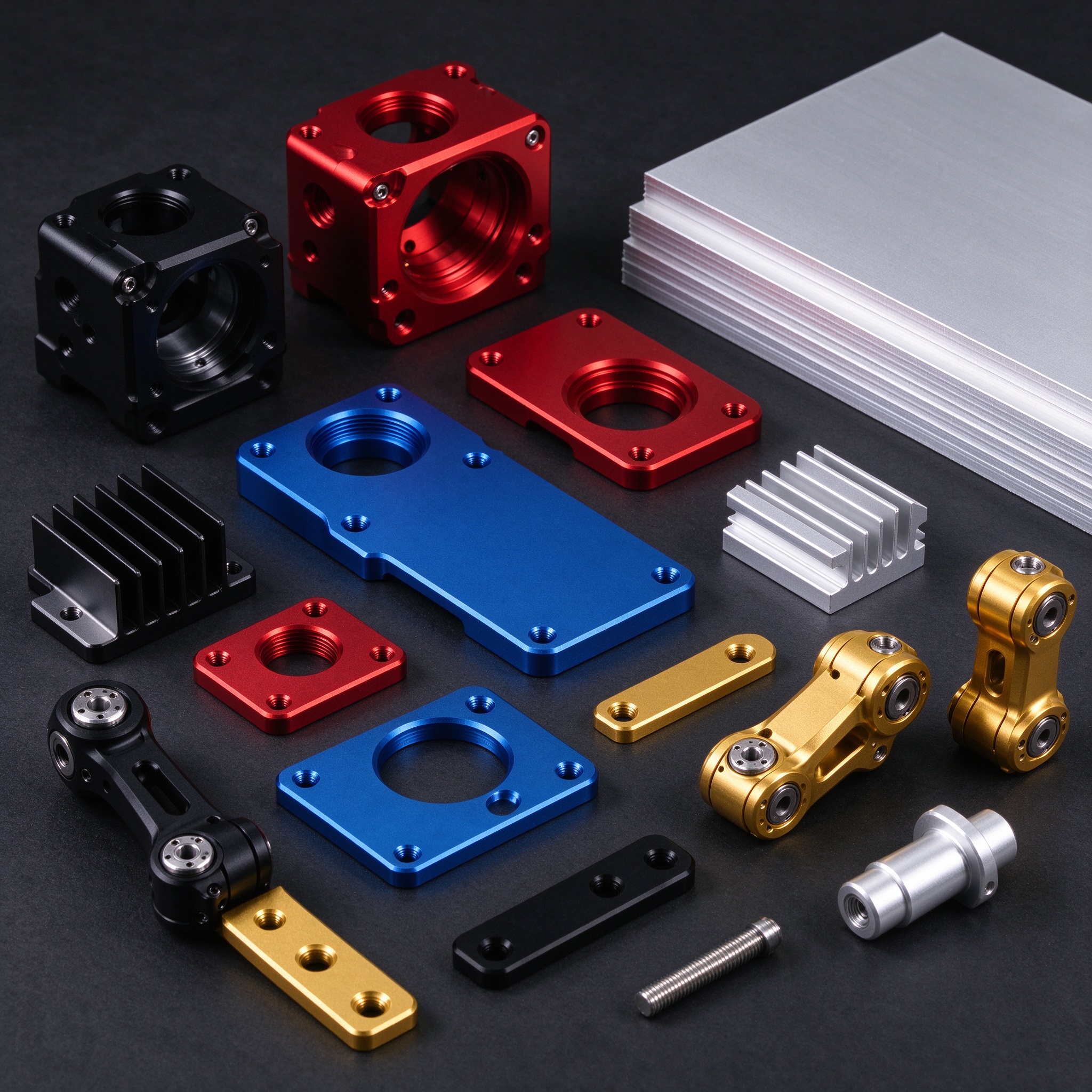
Aluminum, stainless steel, brass, copper, titanium and engineering plastics.
| Axis configuration | 5-axis simultaneous / 3+2 |
|---|---|
| Positioning accuracy | ±0.005 mm |
| Working envelope | up to Ø800 × 600 mm |
| Typical tolerance | ±0.01 mm |
| Minimum feature | Ø0.3 mm holes |
| Surface roughness | Ra 0.4–1.6 µm |
Common applications
- Impellers & blisks
- Turbine blades
- Aerospace structures
- Robot joints
- Medical devices
- Mold tooling
- Optical housings
- Pump components
Frequently asked questions
What is the difference between 3+2 and simultaneous 5-axis?
3+2 locks the part at an angle then runs 3-axis cuts; simultaneous 5-axis moves all five axes during the cut for true continuous surfaces such as blades and impellers.
When does 5-axis machining justify the cost?
When parts have features on several faces, complex curved surfaces, or very tight tolerances — one 5-axis setup replaces multiple operations and improves accuracy.
What files do you need?
STEP/STP or IGES solid models plus a 2D PDF for tolerances and notes. We also accept samples or hand sketches for early prototyping.
Can you provide first-article inspection?
Yes. We provide CMM dimensional reports and material/finish certificates on request.
Related services
Ready to start your precision parts?
Send your drawings and get a free DFM review and quote within 24 hours.